At A Glance
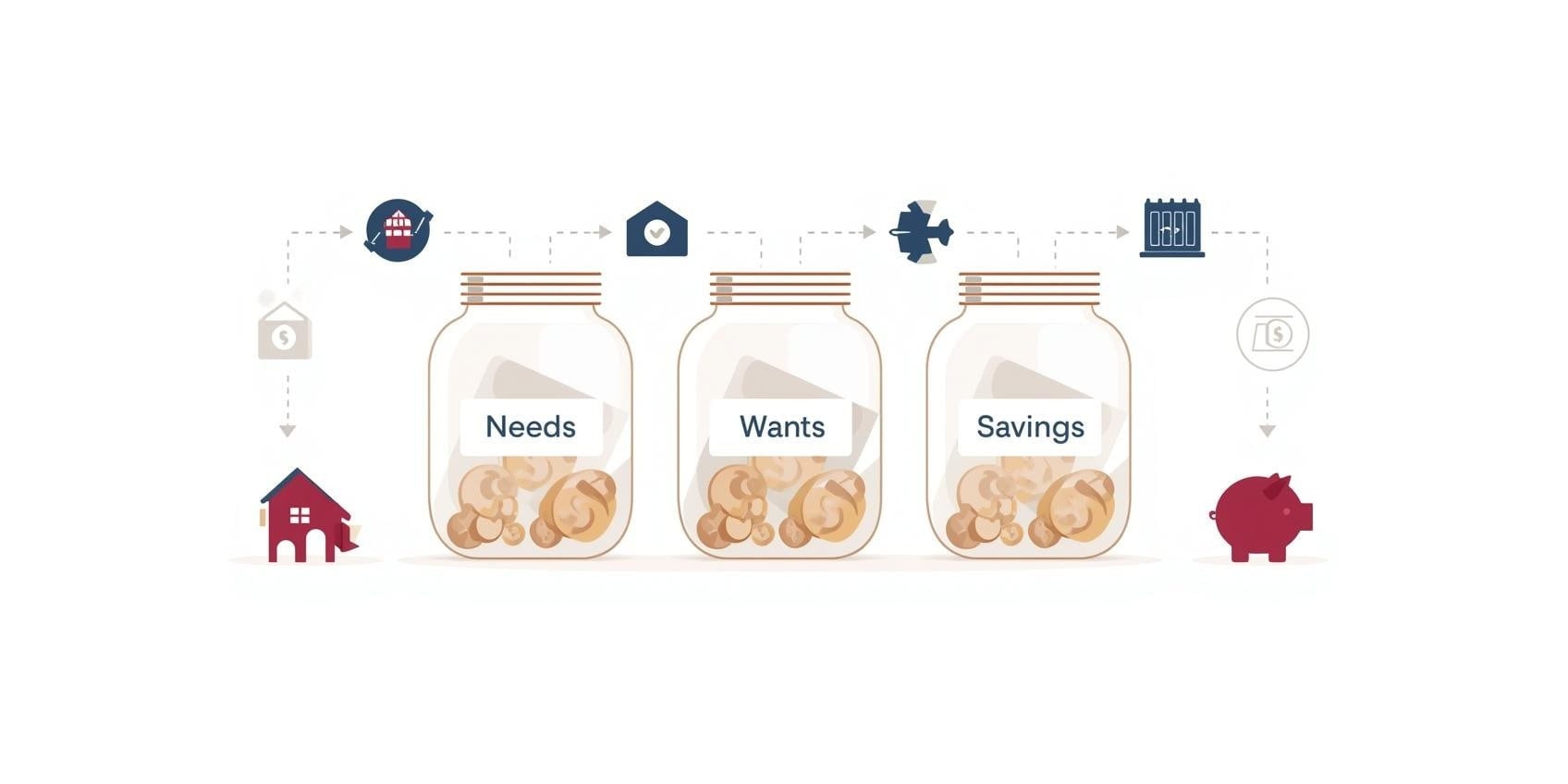
- Keep it simple. Most people do best starting with just a few broad categories and adding more only if it helps them make better decisions. The simplest approach uses three categories: needs, wants, and savings. This is the same structure used in the popular 50/30/20 and 70/20/10 budgets.
- Add your goals. Once you’ve got the basics down, adjust your categories around your financial goals. For example, if you’re paying off debt and saving for an emergency fund, you might split your savings into two buckets. The goal is to keep things as simple as possible while still giving you clarity on where your money is going.
- Add in constraints. Your goals direct money toward what matters most, while your constraints help you stay disciplined in other areas. Constraints aren’t a bad thing. They make sure you’re saving in one place so you can spend intentionally in another. Build constraint categories around the areas where you tend to overspend. For example, dining out, gifts, or entertainment. These are valuable parts of life that you still want to enjoy, but you may want to spend less on.
- Add a category for future expenses. A sinking fund covers costs that don’t happen every month such as insurance, holiday gifts, or car maintenance. Set aside a small amount each month so these predictable costs don’t catch you off guard when they come due.
The more complicated your budget categories get, the harder it is to keep up.
I’ve seen people try to separate every little thing like trash, electric, and gas, even when the bill is the same each month.
It feels organized at first, but all that extra tracking just makes budgeting harder to stick with.
When your budget is easy to manage, you’re more likely to stay consistent and actually reach your goals.
In this article, I’ll share a simple step-by-step way to create budget categories that actually work for you — not some one-size-fits-all list.
You’ll start with a solid foundation, set money aside for future expenses, and shape your categories around your goals and spending habits.
Step 1: See Where Your Money Actually Goes
Before you can create categories that fit your life, you need a clear picture of where your money is going.
This isn’t about tracking every penny forever. It’s about getting enough real data to see your spending patterns so you can build categories that reflect how you actually live and spend.
The easiest way to do this is by using a budgeting app.
Tools like Rocket Money offer a free plan that connects to your accounts and shows where your money has been going over the last 30, 60, or 90 days. If you want more control, premium tools like Monarch Money let you fully customize categories and add goals.
You can also go old-school.
Pull up your credit card and bank statements for the past month or two, drop everything into a spreadsheet, and group transactions into broad buckets such as housing, transportation, and food.
It’s not fancy, but it works.
Don’t obsess for now about choosing the perfect tool.
The goal right now is to get the data.
If you want help finding the right tool, see The Best Budgeting Apps for options that fit every budget and style.
Don’t Skip This Step
You don’t need to track every dollar forever. But if your spending feels off, go deeper for a month or two. Getting granular temporarily can highlight lifestyle creep — those slow spending increases that blend into the background. Once you’ve spotted the pattern, zoom back out and keep things simple.
Step 2: Sort Spending Into Needs, Wants, and Savings
Once you have a few months of real spending data, the next step is to sort every expense into one of three main categories: needs, wants, or savings.
This is the same structure used in the 50/30/20 and 70/20/10 budgets.
You don’t have to follow those rules exactly, but they give you a simple way to start seeing where your money really goes.
Here’s how to think about each category:
- Needs are the essentials that keep your life running. Things like rent or mortgage payments, utilities, insurance, groceries, and transportation.
- Wants are the extras that make life more enjoyable but aren’t essential. This includes dining out, entertainment, travel, gym memberships and subscriptions.
- Savings covers anything that improves your future financial position. That includes emergency funds, retirement contributions, and paying down high-interest debt.
You’re done with this stage once you’ve categorized at least one month of spending.
Three months is even better because it smooths out one-time expenses and gives you a more accurate picture.
Once you’ve done that, you’ll have the foundation you need to start adjusting your categories around your goals, which we’ll cover next.
Step 3: Build Categories Around Goals and Overspending Triggers
Once you’ve organized your spending into needs, wants, and savings, the next step is to build out your budgeting categories.
This is where your budget starts to take shape around your real priorities.
Start by identifying your goals. These are the things you want your money to accomplish, like building an emergency fund, paying off debt, saving for a home, or setting aside money for travel.
You can use a financial goal-setting worksheet or even a simple list to clarify what matters most.
Then, define your constraint categories. These are areas where spending is part of your life but can easily get out of hand, such as dining out, entertainment, or shopping.
Creating categories for these helps you stay intentional about how much you spend without cutting them out completely.
When you combine goals and constraints, you end up with a clear set of budgeting categories that fit your life.
For example, your categories might include:
- Needs
- Wants
- Savings
- Emergency Fund
- Home Down Payment
- Travel
- Dining Out
Together, these categories help you direct your money where it matters most and limit the areas that tend to run off track.
The Big Idea
Build your budgeting categories around your goals and your constraints.
That’s how you create a system that reflects your values and keeps your spending aligned with what’s most important to you.
Step 4: Plan for Non-Monthly Costs With a Sinking Fund
Now that you’ve built out your budgeting categories, one more to include is a sinking fund.
A sinking fund is a simple category where you set aside money for future expenses that aren’t monthly, but that you know are coming.
Think annual insurance premiums, school fees, holiday shopping, or seasonal home maintenance projects. These aren’t long-term goals, but if you don’t plan for them, they can easily throw your budget off track.
A lot of people feel like their budget “doesn’t work,” but when you look closer, it’s often because predictable expenses keep popping up unexpectedly. Holiday gifts, property taxes, or an annual subscription come due, and suddenly the month feels tight.
You can prevent that by saving a little each month. Look back at your past year’s spending to spot those repeat costs, then divide the total by twelve and set that amount aside each month.
Sinking funds can even save you money.
For example, many insurance companies offer a discount for paying six months at a time instead of monthly. Having that money ready means you can take advantage of those savings.
The key is to keep it simple.
You don’t need a separate account for every category—just one “future expenses” fund can make a big difference in keeping your budget steady.
Conclusion: Keep It Simple, Personal, and Built for Real Life
Most people don’t quit budgeting because they’re lazy. They quit because it starts feeling like a report card on their choices.
When money feels like judgment instead of clarity, it’s natural to look away.
You tell yourself you’ll get back on track next month, but next month looks a lot like this one.
Then comes the fix we all try: more tracking.
Groceries, gas, utilities, clothing, coffee, subscriptions, entertainment, and on and on. It feels productive, even organized at first. But that level of detail just turns budgeting into another chore.
A good budget doesn’t need twelve categories. Only the right ones
Simple systems work best because they’re built for real life. They account for the fact that people overspend when stressed, forget to log expenses when life gets busy, and need small wins to stay motivated.
When your categories are built around your goals and your weak spots, they tell you what’s working and what’s not.
You can see at a glance whether your money is going toward what matters most or getting lost in the noise.
So keep it simple.
Focus on your needs, wants, and savings.
Build in constraints where you tend to overspend, and break out your goals so you can see progress clearly.
And if you’re at it, make it personal.
Don’t just call it a “travel fund.”
Call it Italy 2026 or The House With the Wrap-Around Porch.
The more it reflects what matters to you, the more likely you are to stick with it.
If you keep overspending, it usually means your categories aren’t giving you enough feedback. Try going more detailed for a month or two with a budgeting app to see exactly where your money is going.
Not neccesarily. The best way to save is through automation. Set up transfers to your savings or investment accounts right after payday — what’s often called a reverse budget. When you pay your goals first, you’re saving by default instead of relying on willpower later. And for the categories that tend to trip you up, go old-school with cash envelopes or prepaid cards. Give yourself a set amount and when it’s gone, it’s gone. That little bit of friction works wonders.
You can roll it over, put it toward a goal, or keep it as a buffer. The goal is not to cut joy but to spend with intention. If you budget $500 for fun, use it, just make sure it goes toward things you truly enjoy!